
October 7, 2026

Vanessa's Story: The hardest homecoming

Living life differently, with Diverse Abilities.

Author

Diverse Abilities Programs Inc.

Share

The Hardest Homecoming | The next steps in Vanessa's journey.

After six months in the hospital, there was only one place I wanted to go: home.


The problem was, the professionals weren’t sure I should.


There was discussion about me being discharged into a care facility where I could have 24-hour support. I understood why. I was completely blind, I had lost my sense of smell, I was recovering from a traumatic brain injury, and I still needed an enormous amount of help.


But I was not going to a care facility.


I had already lost six months with my children. I couldn’t bear the thought of finally leaving the hospital only to live somewhere they couldn’t truly be with me.


That was when my stubbornness kicked in.


Thankfully, my parents listened. They helped arrange 24-hour care in a house instead, with nurses and caregivers around the clock.


But there was another problem.


I didn’t actually have a home to go back to.


While I was in the hospital, my family hadn’t known whether I was going to survive. My rental house had been packed up and everything put into storage. Friends and family had stepped in to help my parents clear out a home filled with children’s toys, belongings and all the normal chaos of family life.


So somebody found me a three-bedroom, ground-level rancher to rent. No stairs. A safer layout. The fire department even came through to check the smoke alarms and help establish a safe route for me to get out in an emergency.


The Ministry needed reassurance that I could be safe.


I just needed my kids.


So I agreed to whatever needed to happen.


I remember being excited when I moved in. I wasn’t in a facility. My children could be with me.


But I quickly learned something:


A house and a home are not necessarily the same thing.


Nothing was familiar.


I couldn’t see where the walls ended or the doorways began. I would feel my way along the walls, searching for doorframes and banging my shins into things while trying to learn this completely unfamiliar space.


And I had someone over my shoulder 24 hours a day.


I was grateful for every nurse and caregiver who helped me, but gratitude doesn’t erase the loss of independence.


Even getting a glass of water could become a 15-minute task.


First, I had to find the kitchen. Then I had to remember where somebody else had decided the glasses belonged. I would find one, make my way to the sink, put my finger inside the glass and wait until I felt the water reach it.


Finally, I could have a drink.


Things I had never thought twice about suddenly required concentration, problem-solving and an incredible amount of energy.


Putting toothpaste on my toothbrush without missing it.


Finding something I had put down five minutes earlier.


Knowing which bottle was shampoo and which was conditioner.


I started learning little tricks. An elastic band around my conditioner made it feel different from my shampoo. Everything needed to have a consistent place. Tactile markers helped me identify things.


Technology helped too. I used a PenFriend, which allowed me to create voice labels. I could label clothing so I knew what I was wearing. I laminated labels for items in my freezer so I could scan them and hear what the food was and how long and at what temperature it needed to be cooked.


They sound like little adaptations.


To me, they were pieces of independence.


I was also unbelievably tired. During those first months at home, I could sleep 14 to 18 hours a day.


Simply existing in this new life was exhausting.


Some moments broke me more than others.


I remember sitting at the table having lunch with my kids when one of them accidentally spilled milk across the table and onto the floor.


It was just spilled milk.


But I cried.


I wasn’t angry. Kids spill things. Accidents happen.


I cried because the mother I had been before would have simply stood up, grabbed a cloth and cleaned it.


Now I couldn’t.


Something so ordinary reminded me of everything that had changed.


Before my accident, I had been a strong, independent, confident mother. Now I needed someone nearby around the clock, and I couldn’t even clean up spilled milk without help.


There were many times when I wanted to give up.


Then I would hear little footsteps.


I would hear my children’s giggles.


And somehow, I would find enough strength to put one foot in front of the other again.


At the time, I thought I needed to become the mother I had been before my accident.


Eventually, I would begin to understand something very different.


I didn’t need to become the old me again.


I needed to learn how to be Mom in this new life.


And that would become my next challenge.


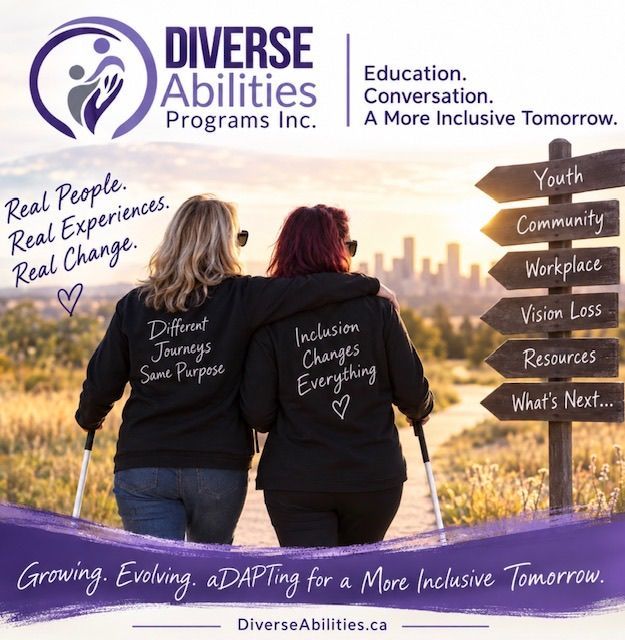
Two women walking next to a sign that points to: youth, community, workplace, vision loss, recourses
By Gina Martin • November 5, 2026
Discover how Diverse Abilities Programs is building a more inclusive tomorrow through lived experience, disability awareness, and meaningful conversations. Explore our youth, community, workplace, and vision loss programs designed to break down barriers, inspire understanding, and create lasting change.
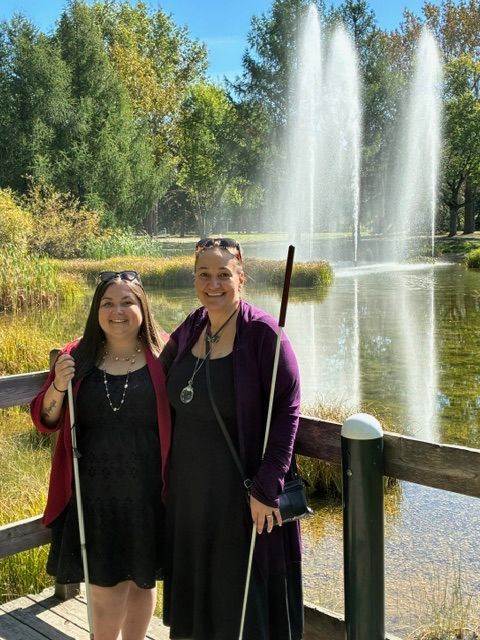
Vanessa and Gina are standing together, holding their canes, similing with a fountain in the back.
By Gina Martin • November 5, 2026
Discover how aDAPTing to Vision Loss is expanding beyond presentations to offer practical consultation, resources, and support. Through their lived experiences with blindness, they help individuals, families, and sighted supporters navigate vision loss, build confidence, and discover new ways to maintain independence.
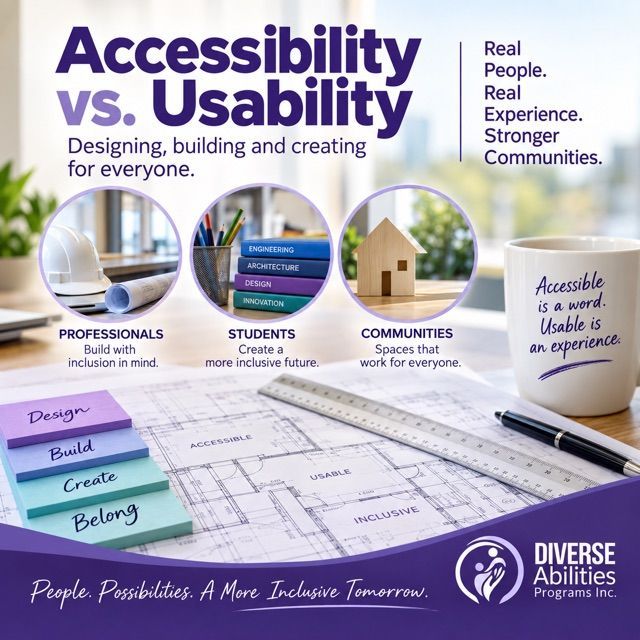
Accessibility vs. Usability graphic featuring blueprints, design tools, and inclusive spaces.
By Gina Martin • November 5, 2026
Discover how aDAPT Accessibility & Usability is evolving into Workplace Inclusion and Youth aDAPT programs. Learn how lived experience, inclusive design, and practical accessibility education help professionals and future innovators create spaces, products, and environments that work for everyone.
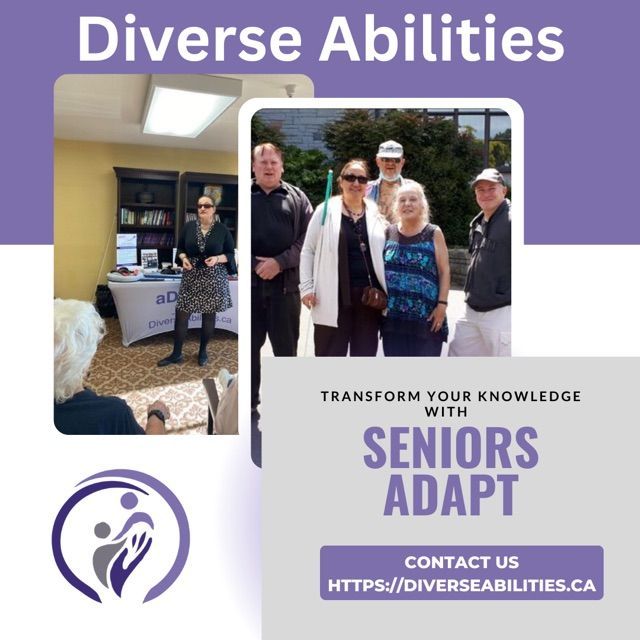
Gina interacting with seniors in 2 images. Text reads transform your knowledge with seniors adapt.
By Gina Martin • November 5, 2026
Discover how Seniors aDAPT is becoming part of Community aDAPT while continuing to support seniors, caregivers, and community organizations. Explore how disability awareness, practical tools, adaptive techniques, and scam awareness training promote independence, accessibility, and inclusion.
4 Animated people are assembling large puzzle pieces as they work together. IDEAL Team Building
By Gina Martin • November 5, 2026
Discover how IDEAL Team Building evolved into aDAPT Workplace Inclusion at Diverse Abilities Programs. Learn how our disability awareness training, lived experience, and practical accessibility strategies help Canadian workplaces build more inclusive and welcoming environments.
October 26, 2026
After becoming blind, Vanessa wondered if travel and adventure could still be part of her life. From her first trip after the hospital to eventually flying solo, she discovered that seeing the world isn’t the only way to experience it.
October 22, 2026
While learning to navigate blindness herself, Vanessa began teaching her children’s classmates about disability, inclusion, and respectful curiosity. Those early classroom conversations helped her children and planted the seeds for something much bigger.
October 15, 2026
After becoming blind, Vanessa had to discover what motherhood would look like in a life that had completely changed. Through challenges, laughter, and meaningful moments with her children, she learned that being Mom isn’t about seeing—it’s about showing up.
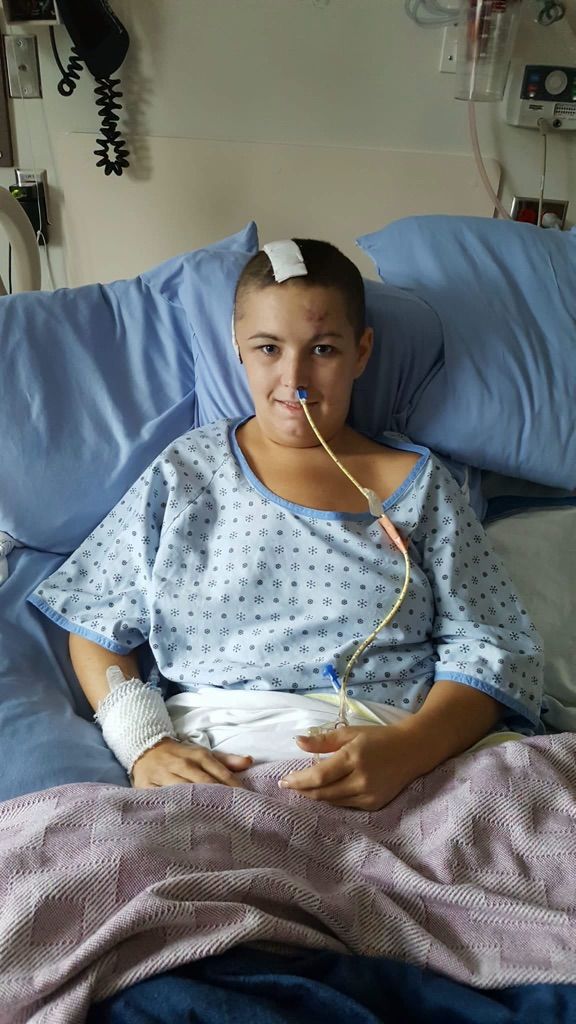
Vanessa in a hospital bed after surgery
September 28, 2026
Vanessa shares how suddenly becoming blind changed not only her life, but her entire family. Through grief, love, adaptation, and small victories, they learned to navigate disability and find a new path forward together.
April 21, 2026
Chairs are more than just somewhere to sit.