April 21, 2026

ADHD Effects Everyone Differently

Living life differently, with Diverse Abilities.

Author

Diverse Abilities Programs Inc.

Share

Discovering How ADHD Shaped My Experiences

For most of my life through school, into adulthood, and now into my 50s, I had no idea that my brain worked differently than others. Then, last year, I was diagnosed with ADHD.


That diagnosis brought me a deep sigh of relief. Suddenly, things began to make sense. I started learning what ADHD really is and how uniquely it shows up in each of us. For the first time, I realized that it's okay for my brain to work differently, It always has.


I didn’t know that most people don’t have to consciously think about every single step in their day. From the moment I wake up, my mind is in overdrive: “Stand up. Put on clothes. Go to the bathroom. Brush teeth. Brush hair. Take medication. Walk to the kitchen. Fill the kettle. Get a cup. Open the drawer for a spoon.” Every single action requires a mental prompt. It’s exhausting and I just thought this was normal, I didn’t know different.


I didn’t realize that most people don’t feel constant frustration trying to remember things, stay focused, or complete basic tasks. I’ve always had a million thoughts crowding my brain, making it difficult to filter, to organize, to retain. My intentions are good, I'm listening but with so much noise in my head, I don’t always hear the message. Not because I don’t care. Because I simply can’t.


For years, I beat myself up. I got angry and frustrated with myself. No matter how hard I tried, things didn’t click. Remembering names, sticking to a to-do list, it all felt impossible. In school, I would stay in during recess and lunch to study, or remain after class because home life was too distracting. I’d study hard, go to sleep, and wake up feeling like my brain had hit reset overnight. All that effort, gone. I carried shame and I told myself, “I’m not smart enough, I’m not good enough, I can’t.”


Growing up, learning differences weren’t recognized like they are now. So, I spent decades pushing myself to meet a standard that wasn’t made for me.


I know several people with ADHD, and we’re all so different. But being able to speak honestly about the chaos and overwhelm in my brain, that no one else can see has been freeing. It’s helped me let go of “I can’t,” and replace it with “I can just differently.” I have learned new strategies that support my brain in the ways it needs. Life is a forever learning journey and acceptance is part of that journey.


I’ve always extended grace and compassion to others but for most of my life, I didn’t give the same grace to myself.


Now, with a diagnosis and the right support, including medication, my world has shifted, not because I needed to be “fixed,” but because I finally understand myself. With understanding has comes self-compassion.
There is absolutely nothing wrong with having a learning disability or any disability, for that matter. Once I began identifying my strengths and stretches, I started building a toolbox of supports that work “with” my brain instead of against it. By connecting with others who truly understand what I experience has opened doors I never would’ve found on my own. I’ve learned new strategies, some work for me, some don’t but even the ones that don’t are valuable, because I can pass them along to someone else who might benefit from them.


My diagnosis has helped me accept that I may not do things the same way as most, but that’s okay. How someone gets from point A to point B shouldn't matter.  What matters is that we’re supported in making the journey.


Talking openly about my challenges within all of my disabilities and expressing what helps me, has taken the guesswork out of my relationships. It’s allowed me to thrive in a world that isn’t always built for people like me.


The more we speak up and share, the more understanding we create and the more we prove that there is nothing wrong with different.


ADHD has absolutely been a struggle, but it’s also a gift. I’m the gal with a million ideas. I can plan a celebration that makes everyone feel welcome. I’m full of energy, think outside the box, connect easily with others, and try to find the good in most things.


My cup isn’t half empty or half full, it’s refillable. Because some days are harder than others. Every day, I learn a little more about how to support myself and that is something to celebrate.


April 21, 2026
Chairs are more than just somewhere to sit.
April 21, 2026
What I wish I had known when I was first diagnosed.
April 21, 2026
All we want is to be seen as a person, not just our disability. 
April 21, 2026
Something really beautiful happened recently, and I’ve been sitting with it .
April 21, 2026
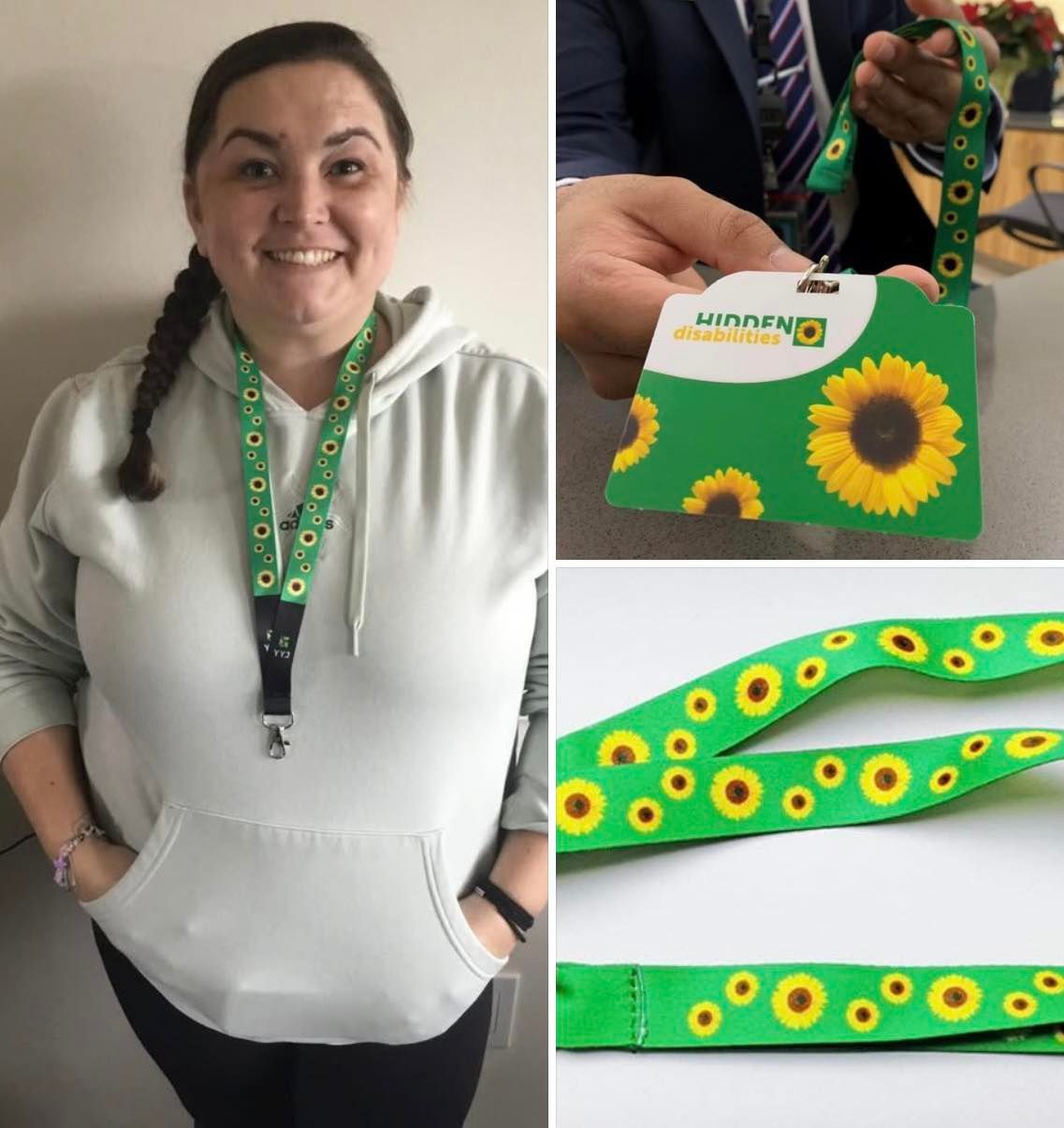
Hidden Disabilities Sunflower: For People Living With Hidden Disabilities
April 21, 2026
Feel Confident Navigating & Travelling Around The City
April 21, 2026
What if creating an inclusive workplace was easier than you thought?
April 21, 2026
In life, three barriers often prevent people with disabilities from fully participating in various activities: Social stigmas, attitudes, and misconceptions about our abilities. The built environment and the lack of accessibility.  Ourselves, which includes fear of the unknown, fear of failure, and lack of confidence. While we may not always be able to change the first two, the third barrier—our mindset—is one that only we can break through. In 1992, I was diagnosed as legally blind due to Progressive Cone Dystrophy. But it wasn’t until 2015 that I fully embraced my blindness. Rather than saying, "I’m losing my sight," I reframed it as, "I’m gaining my blindness." This shift in mindset allowed me to step out of my comfort zone and explore non-visual techniques to complete tasks I once relied on sight for. Patience, time, and yes, frustration, were all part of the process. But now, I’m living my best life—doing even more than I did with vision. When friends asked me to go axe 🪓 and dagger 🗡️ throwing, I immediately said yes. I love new experiences, and I wasn’t going to let my blindness be a barrier. We spent an hour learning how to hold, aim, and throw. I chose to wear a blindfold because the small amount of vision I have left can be more distracting than helpful. My focus wasn’t on whether I got a bullseye but on having fun, being included, and trying something new. After all, we never know if we’ll like something until we try. For this experience, the target was about 15 feet away, with chain fences on either side. I could stretch my arms out and feel both fences, giving me a sense of space. There was also a tactile line under my feet, ensuring I knew where to stand. To throw the axe, I gripped the bottom of the handle with my dominant hand (right) and placed my left hand over my right. I raised the axe over my head, letting it rest between my shoulder blades, squared my body to the target, relaxed my shoulders, and threw. I hit the target most times and even landed two bullseyes! It was exhilarating. My husband and friends joined in by donning blindfolds and throwing axes, too. Even the staff took part in the experience, and we all had a blast. The dagger 🗡️ proved more challenging. To throw it, I had to position the tip of the blade pointing toward me, over my shoulder, next to my ear—a nerve-wracking task without sight. I threw it four times and managed to hit the board once (the handle stuck, not the blade, but close enough for me to laugh about it). While I enjoyed trying it, I much preferred the axe and will definitely be doing that again. This experience reinforced the idea that people with disabilities may not always meet others where they are—but that doesn’t stop others from meeting us where we are. It’s not about the perfect experience; it’s about trying and enjoying the process. So, step out of your comfort zone. You may discover something new and, most importantly, have fun.
April 21, 2026
Are they really accessible for everyone to use? Here's a simple tip to make your business more accessible:
April 21, 2026
It is called a cane & there are many different types . Let's explore what safety, consideration, & kindness looks like when interacting with those around us who use mobility canes.