April 21, 2026

Navigating With Cardinal Directions, the Sun, & Audible Crossings

Living life differently, with Diverse Abilities.

Author

Diverse Abilities Programs Inc.

Share

Feel Confident Navigating & Travelling Around The City

Cardinal directions are a skill many have lost, but for those of us who are blind, they are an essential tool for independent navigation.


This is how I navigate using cardinal directions.


When I am walking, if my feet turn slightly to the Left or Right, it changes the direction I am traveling. My Left or Right is no longer where it was before, and without realizing it, I can become disoriented or lost. However, using Cardinal directions, I always have a fixed reference point. NORTH, SOUTH, EAST, and WEST never change.


Victoria’s Confusing Streets vs. Edmonton’s Grid


Living in Victoria, BC, my whole life, I learned to navigate using landmarks and memorized routes. The street names in Victoria have no rhyme or reason and are completely random. Our roads are named, not numbered, and a street may have the same name but be followed by ROAD, TERRACE, STREET, PLACE, CRESCENT, DRIVE, AVENUE, or WAY. Some roads even have five different names along the same stretch. It is confusing for sighted individuals, so imagine navigating it with low or no vision. For me mapping in Victoria was a challenge. 

Now, I live in Edmonton, where the city is built like a grid.


Streets run NORTH-SOUTH.


Avenues run EAST-WEST.


I can now visualize where I need to go.


If I am traveling NORTH, the numbers on the avenues get higher. If I am traveling SOUTH, they get lower. Every road that intersects with a STREET increases or decreases by one, depending on the direction I am traveling. On the EAST side of the STREET, the building numbers are odd, and on the WEST side, the numbers are EVEN.


If I am traveling WEST, the numbers on the streets get higher. If I am traveling EAST, they get lower. Every road that intersects with an AVENUE increases or decreases by one, depending on the direction I am traveling. On the NORTH side of the AVENUE, the building numbers are EVEN, and on the SOUTH side, they are odd.


This grid system makes it easy for me to navigate the city and get around independently. Mastering Cardinal directions isn’t just useful, it’s an essential life skill.


Navigating with Audible Signals


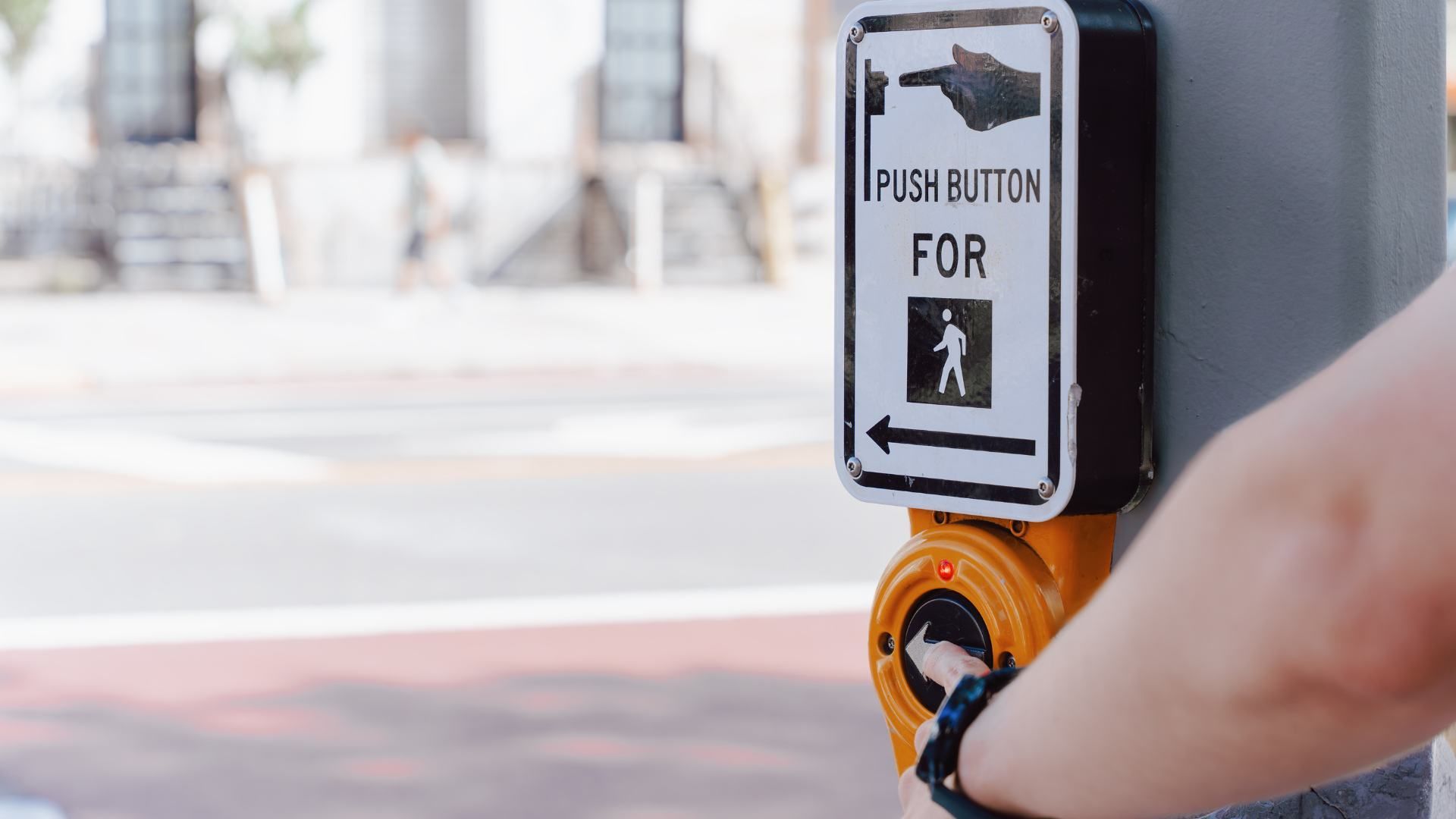
For myself and those of us who cannot see the walk and don’t walk visual signal, we rely on audible pedestrian signals.


At intersections, the audible signals let us know when it is safe to cross and in which direction. The sound mimics chirping birds and has two distinct tones.


When you hear coo-coo, coo-coo, it is safe to travel NORTH-SOUTH and cross over the EAST-WEST running avenues.


When you hear cheep, cheep, cheep, it is safe to travel EAST-WEST and cross over the NORTH-SOUTH running streets.


Using The Sun To Navigate


The Sun’s position in the sky also helps me determine direction.


In NORTH AMERICA, the Sun is always slightly SOUTH, meaning it will never be directly overhead. This makes it easy to find SOUTH simply by noting the Sun’s position.


The Sun rises in the EAST and sets in the WEST.


By observing where the Sun is in the sky, I can determine both direction and time of day.

Mastering navigation through Cardinal directions, audible signals, and natural cues like the Sun is an invaluable skill.


“Having a disability has not changed who I am, it has changed my interactions with the world.” Gina Marin

April 21, 2026
Chairs are more than just somewhere to sit.
April 21, 2026
What I wish I had known when I was first diagnosed.
April 21, 2026
All we want is to be seen as a person, not just our disability. 
April 21, 2026
Something really beautiful happened recently, and I’ve been sitting with it .
April 21, 2026
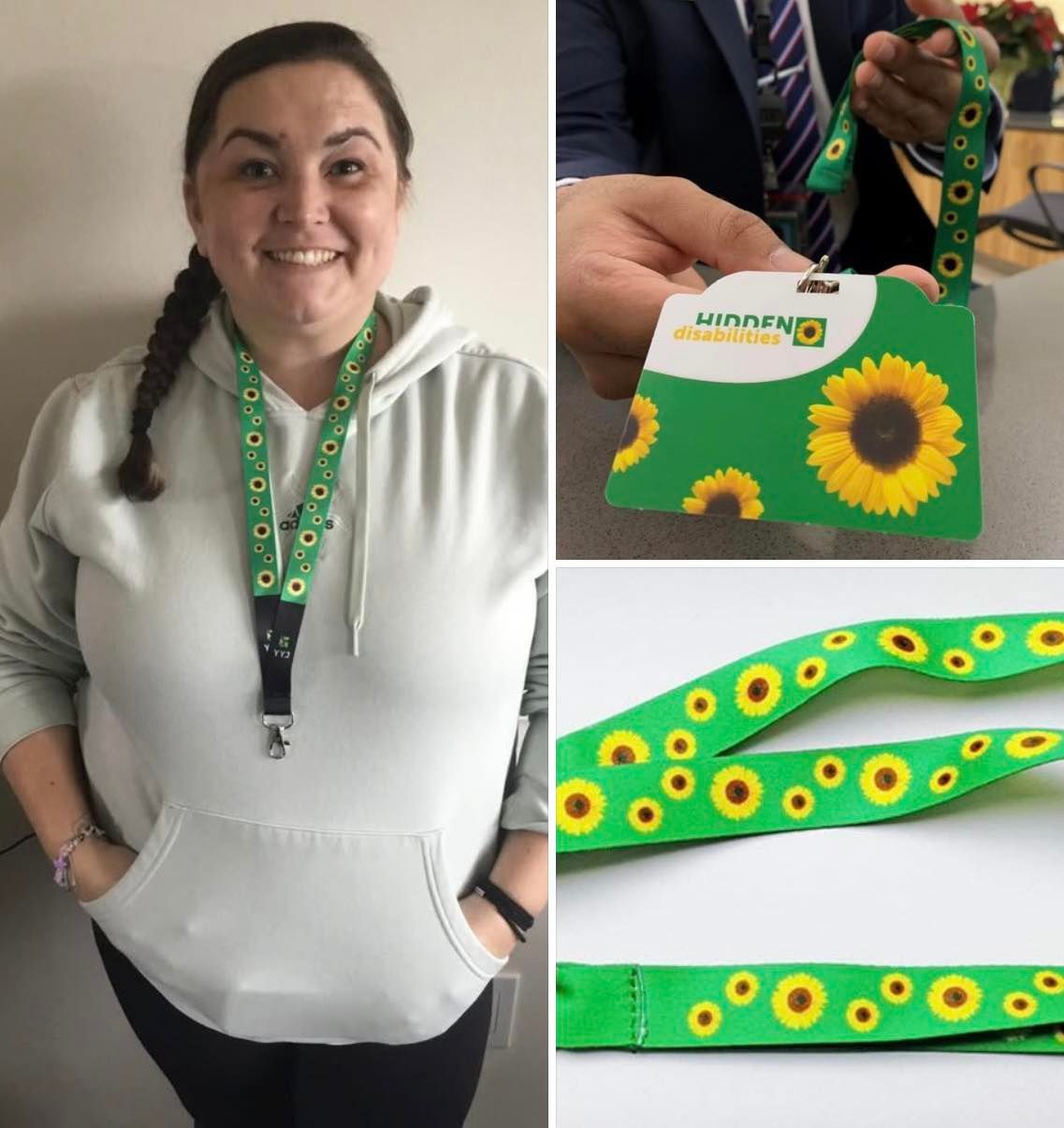
Hidden Disabilities Sunflower: For People Living With Hidden Disabilities
April 21, 2026
Discovering How ADHD Shaped My Experiences
April 21, 2026
What if creating an inclusive workplace was easier than you thought?
April 21, 2026
In life, three barriers often prevent people with disabilities from fully participating in various activities: Social stigmas, attitudes, and misconceptions about our abilities. The built environment and the lack of accessibility.  Ourselves, which includes fear of the unknown, fear of failure, and lack of confidence. While we may not always be able to change the first two, the third barrier—our mindset—is one that only we can break through. In 1992, I was diagnosed as legally blind due to Progressive Cone Dystrophy. But it wasn’t until 2015 that I fully embraced my blindness. Rather than saying, "I’m losing my sight," I reframed it as, "I’m gaining my blindness." This shift in mindset allowed me to step out of my comfort zone and explore non-visual techniques to complete tasks I once relied on sight for. Patience, time, and yes, frustration, were all part of the process. But now, I’m living my best life—doing even more than I did with vision. When friends asked me to go axe 🪓 and dagger 🗡️ throwing, I immediately said yes. I love new experiences, and I wasn’t going to let my blindness be a barrier. We spent an hour learning how to hold, aim, and throw. I chose to wear a blindfold because the small amount of vision I have left can be more distracting than helpful. My focus wasn’t on whether I got a bullseye but on having fun, being included, and trying something new. After all, we never know if we’ll like something until we try. For this experience, the target was about 15 feet away, with chain fences on either side. I could stretch my arms out and feel both fences, giving me a sense of space. There was also a tactile line under my feet, ensuring I knew where to stand. To throw the axe, I gripped the bottom of the handle with my dominant hand (right) and placed my left hand over my right. I raised the axe over my head, letting it rest between my shoulder blades, squared my body to the target, relaxed my shoulders, and threw. I hit the target most times and even landed two bullseyes! It was exhilarating. My husband and friends joined in by donning blindfolds and throwing axes, too. Even the staff took part in the experience, and we all had a blast. The dagger 🗡️ proved more challenging. To throw it, I had to position the tip of the blade pointing toward me, over my shoulder, next to my ear—a nerve-wracking task without sight. I threw it four times and managed to hit the board once (the handle stuck, not the blade, but close enough for me to laugh about it). While I enjoyed trying it, I much preferred the axe and will definitely be doing that again. This experience reinforced the idea that people with disabilities may not always meet others where they are—but that doesn’t stop others from meeting us where we are. It’s not about the perfect experience; it’s about trying and enjoying the process. So, step out of your comfort zone. You may discover something new and, most importantly, have fun.
April 21, 2026
Are they really accessible for everyone to use? Here's a simple tip to make your business more accessible:
April 21, 2026
It is called a cane & there are many different types . Let's explore what safety, consideration, & kindness looks like when interacting with those around us who use mobility canes.