April 21, 2026

Zip Lining: Enjoy Your Life!

Living life differently, with Diverse Abilities.

Author

Diverse Abilities Programs Inc.

Share

Ways To Navigate Zip Lining With Low To No Vision:

The first time I zip-lined was in 2016 while I was attending The Louisiana Centre for the Blind, receiving training to navigate life with sight loss.  What was unique about this adventure was that we all wore learning shades (a blindfold)!  It was another exhilarating experience in learning how to enjoy adventures, only differently than when I had sight.


I have been on a few different kinds of zip lines now, and I love the rush and the sensation of flying! I want to share some strategies that may be helpful for people who are partially sighted or blind and want to try zip-lining.


Strategy 1:

If you want to do the ropes course, it is fun, but I strongly recommend going with 2 friends or family members that you trust and start out on a straight zip.


It is important to use your voice and ask for what you need. Once, I went to a ropes course alone. That was not manageable for me.  I learned that day to ask for help. A Father and his teenage son kindly helped me along the course. The Dad went down first, and the son waited with me, alerting me when the coast was clear and telling me when to go, and the Dad yelled to me when to start braking. We managed to get through it, but I found it more challenging than I was comfortable with. I would not recommend doing a ropes course with a zip line to start. Start with a straight zip for a successful experience.


Strategy 2:

Advocate for yourself by pointing out workable, safe alternatives.


The next zip line I went on was not going to allow me to go because I would not be able to see the orange flag markers on the ground that are the indicators of when to start slowing down. I did have 15% or so of my vision remaining at that time.  I advocated for myself and said, “You are right. I cannot see your markers, but there are other landmarks I could use to know when to start slowing down, such as groupings of trees, buildings, bodies of water, and roads.” I was able to successfully manage. I did have a difficult time with my eyes adjusting from the sun when transitioning to shade, and I will always wear my sunglasses from now on. For me, it is safer.


Strategy 3:

Choose a side-by-side zip line and go with a trusted friend to act as a guide as you zip along!


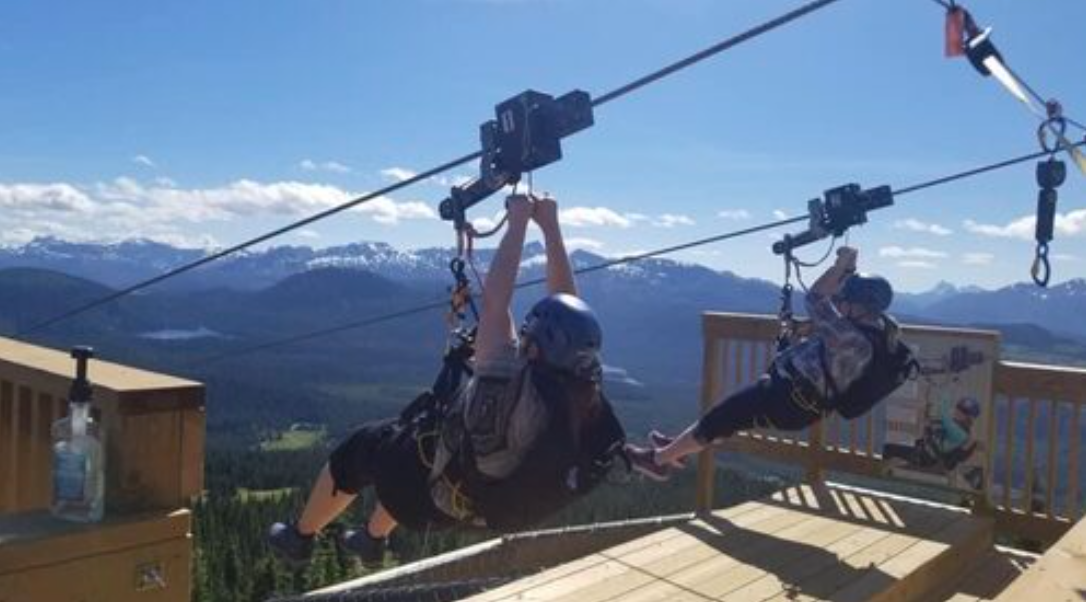
My next zip line experience, I was able to share with my best friend. There were 2 zip lines side by side, about 10 feet apart. We could go at the same time, so I kept her in my peripheral vision and slowed when she started slowing. That was fun -- but I wanted to go faster, ha ha!


Strategy 4:

Find a method that allows you to hear and follow verbal directions. Maybe this would be a Bluetooth earpiece to overcome ambient noise that prevents normal hearing.


Recently, my husband and I went. Again, it was the side-by-side zip line.  This time, a walkie-talkie was fastened to my harness, and the guide at the bottom spoke when it was time for me to start slowing down. Unfortunately, on the first of 4 zip lines, I did not hear him telling me to slow down. I was going full speed, adrenaline pumping fast, and the sound of the zip line buzzing overpowered the walkie-talkie! 


Strategy 5:

Choose a zip line that allows easier speed management. You don’t have to go on the highest and fastest one.


The next 3 zip lines I went slower. On the Eagle Flight, I controlled the speed. Going slower did help me hear when to slow down.


One lady on our tour was a very loud whistler, and she tried to alert me to slow down, but I did not hear her at all, so that was not an option on that course. An air horn could be a good indicator.  Next time I go, I will take an air horn to see if I can hear it over the sound of the buzzing from the zip line. 


Do you have other techniques or methods to help you navigate the adventure of zip-lining with low to no sight? It would be great if you could share your way so others can be inspired to step out of their comfort zone.
April 21, 2026
Chairs are more than just somewhere to sit.
April 21, 2026
What I wish I had known when I was first diagnosed.
April 21, 2026
All we want is to be seen as a person, not just our disability. 
April 21, 2026
Something really beautiful happened recently, and I’ve been sitting with it .
April 21, 2026
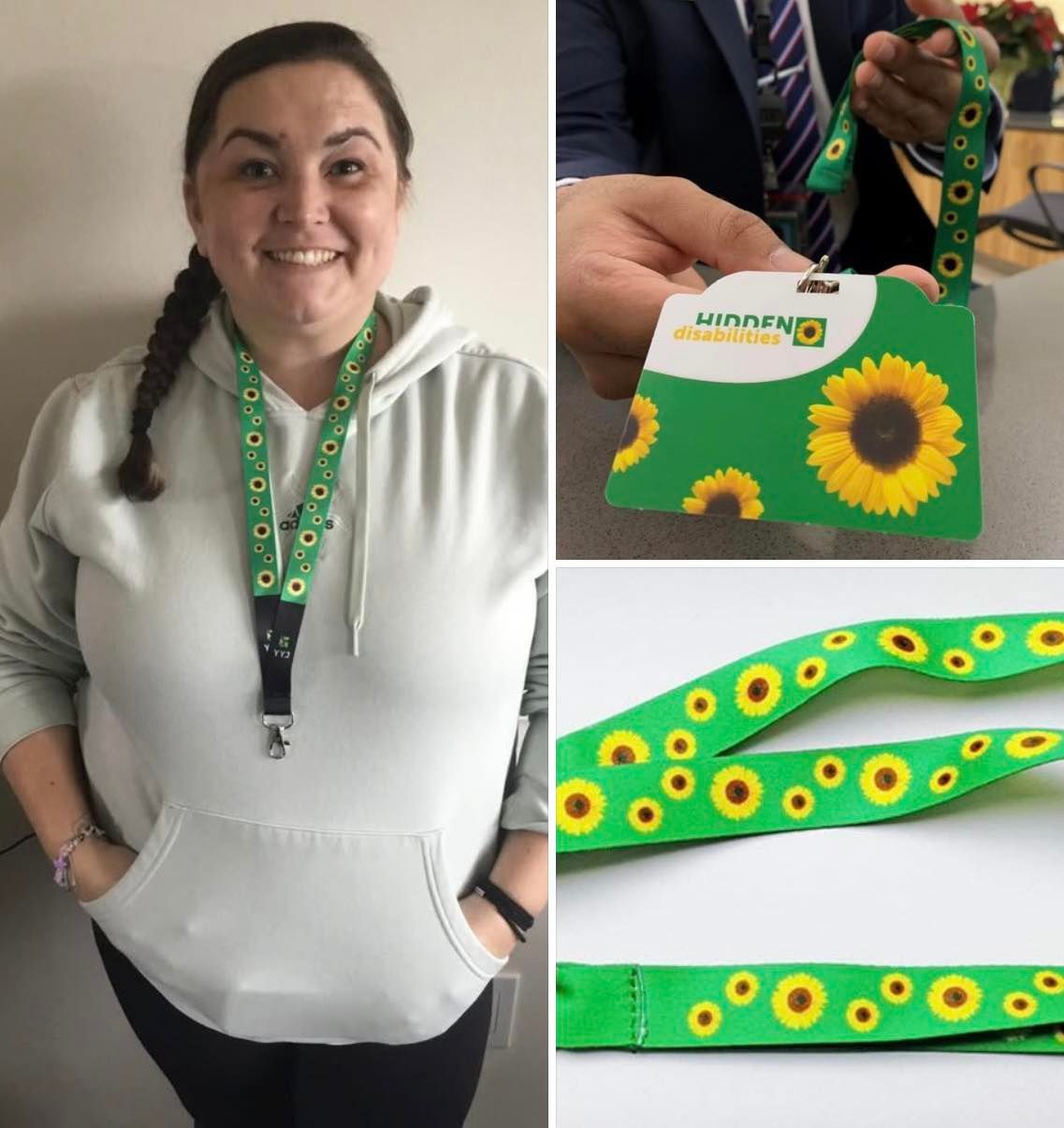
Hidden Disabilities Sunflower: For People Living With Hidden Disabilities
April 21, 2026
Feel Confident Navigating & Travelling Around The City
April 21, 2026
Discovering How ADHD Shaped My Experiences
April 21, 2026
What if creating an inclusive workplace was easier than you thought?
April 21, 2026
In life, three barriers often prevent people with disabilities from fully participating in various activities: Social stigmas, attitudes, and misconceptions about our abilities. The built environment and the lack of accessibility.  Ourselves, which includes fear of the unknown, fear of failure, and lack of confidence. While we may not always be able to change the first two, the third barrier—our mindset—is one that only we can break through. In 1992, I was diagnosed as legally blind due to Progressive Cone Dystrophy. But it wasn’t until 2015 that I fully embraced my blindness. Rather than saying, "I’m losing my sight," I reframed it as, "I’m gaining my blindness." This shift in mindset allowed me to step out of my comfort zone and explore non-visual techniques to complete tasks I once relied on sight for. Patience, time, and yes, frustration, were all part of the process. But now, I’m living my best life—doing even more than I did with vision. When friends asked me to go axe 🪓 and dagger 🗡️ throwing, I immediately said yes. I love new experiences, and I wasn’t going to let my blindness be a barrier. We spent an hour learning how to hold, aim, and throw. I chose to wear a blindfold because the small amount of vision I have left can be more distracting than helpful. My focus wasn’t on whether I got a bullseye but on having fun, being included, and trying something new. After all, we never know if we’ll like something until we try. For this experience, the target was about 15 feet away, with chain fences on either side. I could stretch my arms out and feel both fences, giving me a sense of space. There was also a tactile line under my feet, ensuring I knew where to stand. To throw the axe, I gripped the bottom of the handle with my dominant hand (right) and placed my left hand over my right. I raised the axe over my head, letting it rest between my shoulder blades, squared my body to the target, relaxed my shoulders, and threw. I hit the target most times and even landed two bullseyes! It was exhilarating. My husband and friends joined in by donning blindfolds and throwing axes, too. Even the staff took part in the experience, and we all had a blast. The dagger 🗡️ proved more challenging. To throw it, I had to position the tip of the blade pointing toward me, over my shoulder, next to my ear—a nerve-wracking task without sight. I threw it four times and managed to hit the board once (the handle stuck, not the blade, but close enough for me to laugh about it). While I enjoyed trying it, I much preferred the axe and will definitely be doing that again. This experience reinforced the idea that people with disabilities may not always meet others where they are—but that doesn’t stop others from meeting us where we are. It’s not about the perfect experience; it’s about trying and enjoying the process. So, step out of your comfort zone. You may discover something new and, most importantly, have fun.
April 21, 2026
Are they really accessible for everyone to use? Here's a simple tip to make your business more accessible: